
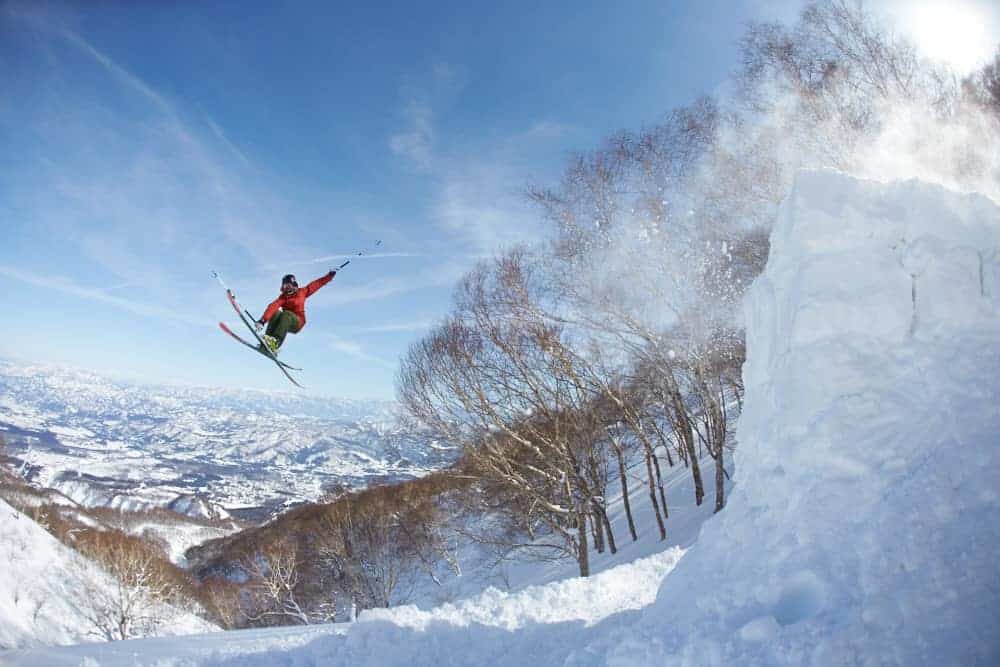
Japan's backcountry is some of the best in the world. Deep snow, perfectly spaced trees and volcanic terrain that seems made for skiing. It's also where people get hurt, lost or buried every season.
Here's how to enjoy it properly.
Inside the ropes vs outside the ropes
Inside the resort boundary, terrain is patrolled and avalanche-controlled. Outside it, nobody is managing the risk except you. That's the most important thing to understand before you leave the groomers.
How gate systems work
Some Japanese resorts, like Niseko, use a gate system. Instead of the whole boundary being open or closed, riders can only access backcountry terrain through designated gates, and only when those gates are open.
- Gates open and close with the conditions. If a gate is closed, it's closed for a reason.
- Passing through a gate means leaving controlled terrain. There's no avalanche control or patrol beyond it.
- Every resort is different. Learn the specific rules at your resort before assuming anything is open.
Never duck a rope
Yes, you. Just because you saw someone else do it doesn't make closed terrain open. Ropes and closures exist because of avalanche risk, not bureaucracy. Ducking a rope puts you, the people below you and any rescuers at risk. In some places it can also cost you your lift pass.
The avalanche essentials
If you're heading beyond the resort boundary, everyone in your group needs:
- An avalanche transceiver (beacon), switched on and checked at the start of the day.
- A shovel, metal, not plastic.
- A probe.
- The training to use them. Gear is useless if you don't know how to use it quickly. Take an avalanche safety course and practise regularly.
Hire a local guide
If you're new to the backcountry, or new to Japan, hire a qualified local guide. They know the terrain, the snowpack and the weather patterns, and they'll find you better snow more safely than you'd find on your own.
Japan-specific hazards
- Tree wells. Deep, loose snow collects around the base of trees. Falling in head-first can be deadly. Always ride with a partner and keep them in sight.
- Whiteouts. Storms can reduce visibility to almost nothing. It's easy to get disoriented and lost.
- Creeks and terrain traps. Deep snow can hide open creeks and gullies.
- Fast-changing weather. Conditions can change quickly, especially on exposed volcanic peaks.
Check your insurance
Many travel insurance policies don't cover off-piste or backcountry skiing. Check yours before you go. Search and rescue can be expensive if something goes wrong.
Layer for the skin track
Backcountry days mean hard climbs followed by cold descents. Breathability matters more than ever. A lightweight merino base layer handles the climb, a packable mid layer goes on at the top, and a Midweight Mesh Balaclava lets you breathe on the way up. Read our Japan layering guide for more.
For more on local customs and safety, see the Respect the Mountain section of the JAPOW Hub.
Frequently Asked Questions
Is backcountry skiing allowed in Japan?
It depends on the resort. Some have gate systems that allow access to backcountry terrain when conditions allow. Others prohibit leaving the resort boundary entirely. Always check local rules.
What avalanche gear do I need for Japan?
An avalanche transceiver, shovel and probe, plus the training to use them. Everyone in your group should carry all three.
Do I need a guide for backcountry skiing in Japan?
It's strongly recommended, especially if you're new to the backcountry or to Japan's snowpack and terrain.
What is a tree well?
A hollow of deep, loose snow around the base of a tree. Falling into one head-first can be life-threatening, so always ride with a partner.








