
Moments
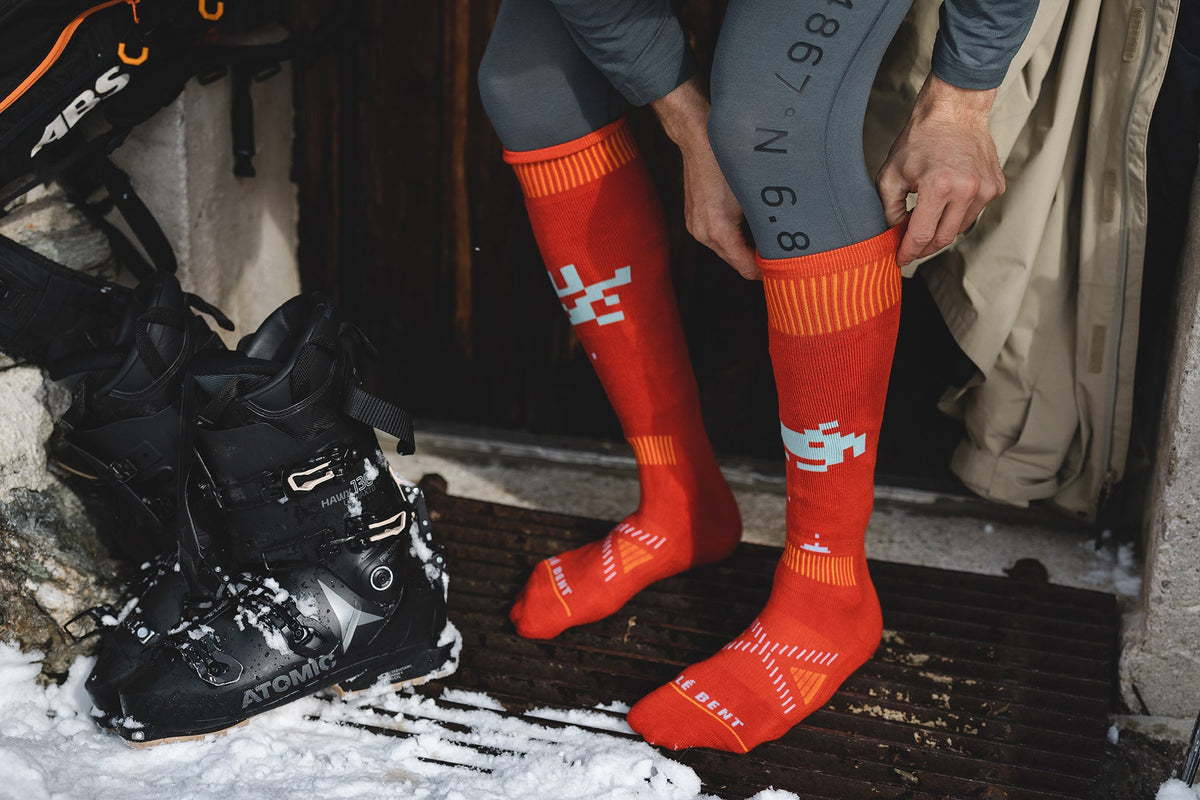

How to Keep Your Feet Warm Skiing and Snowboarding
Cold feet in ski boots usually come down to three things: moisture, poor circulation and a bad fit. A thicker sock rarely fixes it and often makes it worse. Here's what actually works. Why do my feet get cold in ski boots? Sweat: feet sweat in a warm car, on the walk to the lift and on hard runs. Damp socks lose their insulation and chill you on the chairlift. Restricted blood flow: a sock that's too thick, two pairs of socks or over-tight buckles squeeze your foot. Less blood flow means colder toes. Too much room: if your foot moves in the boot, you clench your toes and buckle tighter, which cuts circulation again. 8 ways to keep your feet warm Wear one good merino-blend snow sock, not two. Our Signature Blend of merino wool and rayon from bamboo regulates temperature and wicks sweat, so feet stay drier and warmer. Choose cushion for your boot, not for warmth. Tight boots: Zero or Targeted Cushion. Roomy boots or feet that run cold: Light or Full Cushion. Put your socks on at the mountain. Drive in other socks and change in the car park so you start dry. Smooth the sock out. No wrinkles at the heel or toe, pulled up over the calf, and nothing tucked into the boot cuff except the sock. Buckle firm, not crushing. Loosen the top buckles on the lift and between runs to let blood flow. Keep your core warm. Your body protects your core first and your toes last. A warmer base layer like the Heavyweight Grid Fleece Crew keeps more warmth going to your feet. Store boots warm and dry. Keep them inside overnight, not in a cold car or ski room, and dry the liners. Get your boots fitted. A bootfitter can fix pressure points and excess volume. Le Bent was born in a ski boot-fitting lab in Val d'Isère, so we've seen what a good fit does for cold toes. Is a thicker sock warmer? Not in a ski boot. A thicker sock takes up space, squeezes your foot and traps more sweat. Warmth comes from staying dry and keeping blood flowing, which is why a well-fitted, thinner merino blend sock is often warmer than a bulky one. More on this in What Socks to Wear Skiing. FAQ What are the warmest ski socks?For roomier boots and very cold days, a Full Cushion merino blend sock. For snug boots, a Light Cushion sock with a good fit will be warmer than forcing in a thick one. Do heated socks help?They can for people with poor circulation, but fix fit and moisture first: most cold-feet problems disappear with a dry, well-fitted sock.
Read more
How to Wash Merino Base Layers and Socks (So They Last)
Machine wash merino base layers and socks on a gentle cycle, don't tumble dry, don't bleach and don't dry clean. Dry them flat or on a line. That's it. Merino blends are easy to care for, and because they resist odour, you don't need to wash them after every wear. Step by step Turn garments inside out to protect the outer surface from pilling. Machine wash on a gentle cycle in cool or lukewarm water with a mild detergent, ideally a wool-friendly one. Skip the fabric softener and bleach. Both damage natural fibres. Don't tumble dry. Heat is what shrinks and weakens merino. Dry flat or on a line out of direct, harsh sun. Merino blends dry quickly. How often should I wash merino? Less often than synthetics. Merino naturally inhibits odour-causing bacteria, so a base layer can be worn several times between washes on a ski trip. Air it out overnight and it's fresh for the next day. Wash socks after a big day or two, and wash anything that's visibly dirty. How do I stop merino shrinking? Avoid heat: no hot washes and no dryer. Our Signature Blend of merino and rayon from bamboo, with elastane in our base layers, holds its shape well when washed cool and line dried. What about pilling? Some light pilling where fabric rubs (under backpack straps, between the thighs) is normal for soft natural fibres. Washing inside out and avoiding rough loads with zips and Velcro helps. A fabric shaver removes pills without damaging the garment. Care for specific products Snow socks: wash inside out so the cushioning stays plush, e.g. the Light Cushion Logo. Heavyweight Grid Fleece: same care; the grid stays lofty if you skip the dryer. See the Grid Fleece Crew. Headwear: balaclavas and neck gaiters go in with your base layers. FAQ Can I hand wash merino?Yes, in cool water with a mild detergent. Press out water gently rather than wringing. Can merino go in the dryer?No. Tumble drying can shrink and weaken the fibres. Dry flat or on a line.
Read more
Is Merino Itchy? Why It Happens and What to Wear Instead
Merino is far softer than regular wool, but some people still find it itchy against bare skin. If that's you, a merino and bamboo blend is the answer: you keep merino's warmth and odour resistance, and the bamboo makes it soft enough that most people who react to merino have no issue. Why does wool itch? Itch comes from fibre ends pressing into the skin. Thicker, stiffer fibres don't bend when they touch you, so they prickle. Merino fibres are much finer than ordinary wool, which is why most people find it comfortable, but sensitive skin can still feel those fibre ends, especially on the neck, wrists and legs. How does bamboo stop the itch? Rayon from bamboo has smoother, rounder fibres with no sharp spurs, and a softness similar to silk and cashmere. Blending it with merino in our Signature Blend means there's less wool fibre against your skin and a smoother surface overall. It's itch-free comfort, so soft you'll want to sleep in it. (We do.) What should I wear if merino makes me itch? Base layers: our base layers are 62% rayon from bamboo and 30% merino. Start with the Womens Midweight Crew or Mens Midweight Crew. Socks: every Le Bent sock uses the same blend, with nylon for durability, from snow socks like the Light Cushion Logo to everyday hike crews. Neck and face: the neck is the most sensitive spot. A blend neck gaiter or balaclava is much kinder than a wool scarf. Everyday: Featherweight tees for warm days and travel. Other tips if you're sensitive Wash new merino once before wearing; it softens the fabric. Use a gentle cycle and skip fabric softener and bleach, which can damage fibres. Choose a close fit: loose fabric rubs more than a layer that moves with you. More on the science in Merino vs Bamboo: Why You Need Both. FAQ Is merino the same as regular wool?No. Merino is a finer, softer wool from Merino sheep. All the merino we use is certified non-mulesed. Can I wear a merino blend if I have eczema or sensitive skin?Many people with sensitive skin find our blend comfortable, but everyone is different, so try it at home first.
Read more
The Best Socks for Travel and Long-Haul Flights
For long flights and travel days, wear merino-blend socks: they regulate temperature from a cold cabin to a hot arrival, resist odour so you can rewear them, and stay soft for hours. Choose a light cushion crew for comfort on the plane and a pair that fits snugly so it doesn't bunch when your feet swell. Why merino socks for travel? Temperature control: warm in an air-conditioned cabin, cool when you land somewhere hot. Odour resistant: merino inhibits odour-causing bacteria, so a pair handles a long-haul flight and a day of sightseeing. Dry and comfortable: our merino and bamboo blend wicks sweat and doesn't itch. Less to pack: because you can wear them more than once, you need fewer pairs. Which style should I wear on the plane? Crew height, light cushion: the most comfortable for sitting for hours and walking through airports. Try the Light Cushion Crew Hike Sock or Terra Crew. Low profile for warm destinations: Light Cushion Minis or the No Show Sock with sneakers. Snow trips: travel in everyday socks and keep your snow socks fresh for the mountain. Should I wear compression socks on long flights? Medical compression stockings are designed to reduce the risk of swelling and DVT on long flights, and are worth discussing with your doctor if you're at risk. A snug-fitting merino sock is about comfort, not medical compression. Travel tips for happy feet Change into fresh socks halfway through a very long trip or at a layover. Walk the aisle and flex your ankles every hour or two. Pack two or three pairs of merino socks for a week: wear, air overnight, rewear. Pair with a Featherweight merino tee for the same odour resistance up top. FAQ Are merino socks too hot in summer?No. Merino regulates temperature and wicks sweat, so a lightweight merino sock is often cooler than cotton. How many socks should I pack for two weeks?Four or five pairs of merino socks is plenty if you air them between wears.
Read more








